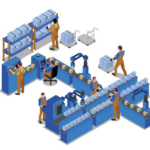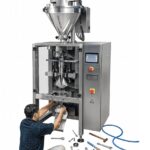

Common packaging equipment in manufacturing includes machines for feeding products, filling containers, sealing packages, applying labels, printing codes, inspecting finished packs, moving products, packing cases, and preparing loads for shipment.
Not every production facility needs every machine. A small business filling jars may use a tabletop filler, manual capper, and semi-automatic labeler. A high-output beverage plant may connect dozens of synchronized machines through conveyors, sensors, accumulation tables, and line controls.
Understanding the function of each machine is the first step toward designing, operating, or improving a packaging line. The broader packaging machine types category includes equipment for bagging, wrapping, filling, closing, labeling, inspection, conveying, case packing, and palletizing. PMMI uses similar functional groups when organizing packaging machinery training and industry categories.
How Common Packaging Equipment Fits into Manufacturing
Packaging equipment is easier to understand when it is divided according to where it operates in the packaging process.
Primary packaging equipment places the product into the package that directly contains it. Examples include bottle fillers, pouch filling machines, tray sealers, and blister packaging machines.
Secondary packaging equipment groups one or more primary packages. Cartoners, bundlers, tray packers, and case packers fall into this category.
Tertiary packaging equipment prepares packaged products for storage, handling, or transportation. Case sealers, palletizers, stretch wrappers, and pallet-labeling systems are common examples.
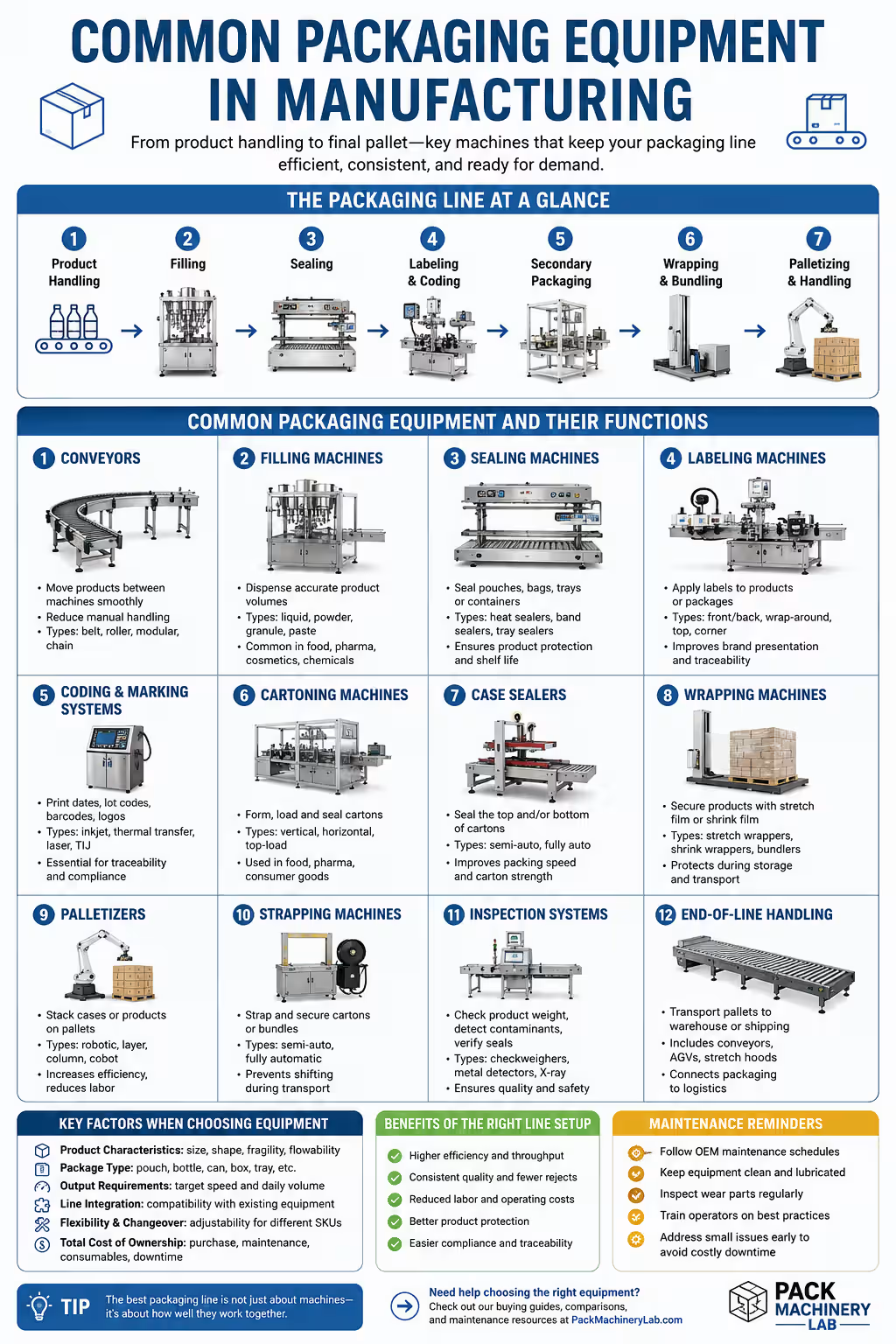
A packaging line may also contain inspection machines, conveyors, feeders, coding systems, reject devices, accumulation sections, and robotic handling equipment. PMMI’s packaging machinery framework includes filling and closing, conveying and handling, inspection, coding and labeling, case packaging, wrapping, palletizing, robotics, and related categories.
Common Packaging Equipment in Manufacturing at a Glance
| Equipment category | Main function | Common package or product examples | Important selection factor |
|---|---|---|---|
| Feeders and unscramblers | Present products or containers in the correct orientation | Bottles, caps, cartons, components | Product shape and orientation |
| Filling and dosing machines | Measure and place product into a container | Liquids, powders, granules, pastes, tablets | Product properties and fill accuracy |
| Form-fill-seal machines | Form a package, fill it, and seal it | Pouches, sachets, pillow bags | Film type and package dimensions |
| Capping and closing machines | Apply and secure closures | Bottles, jars, tubes, cans | Closure type and torque requirements |
| Sealing machines | Create or reinforce a package seal | Bags, trays, cups, cartons | Material and sealing method |
| Wrapping machines | Enclose or stabilize products with film or paper | Individual products, bundles, pallets | Load shape and protection needs |
| Labeling machines | Apply product or logistics labels | Bottles, cartons, cases, pallets | Container geometry and label position |
| Coding and marking systems | Print variable information | Dates, lot codes, barcodes, serial data | Substrate and required code quality |
| Inspection equipment | Detect packaging or product defects | Filled containers, labels, seals, cases | Defect type and rejection method |
| Conveyors and accumulation systems | Move and buffer products between machines | Containers, cartons, cases, pallets | Product stability and line layout |
| Cartoners and case packers | Load products into cartons, trays, or cases | Pouches, bottles, boxes, multipacks | Pack pattern and product orientation |
| Case sealers | Close corrugated shipping cases | Regular slotted cartons and cases | Case-size range and closure method |
| Palletizers | Arrange cases or bags on pallets | Cases, trays, sacks, bundles | Pallet pattern and load stability |
| Load-stabilization equipment | Secure palletized loads | Stretch-wrapped or strapped pallets | Load weight, shape, and transport conditions |
The machinery required depends on the product, package format, output target, available labor, changeover frequency, sanitation needs, and the operations immediately before and after packaging.
1. Product Feeders, Container Unscramblers, and Orienting Equipment
Before a machine can fill, label, or close a package, the product or container usually needs to arrive in a controlled position.
Feeders separate bulk components and deliver them individually. Unscramblers take randomly oriented containers—such as empty plastic bottles—and place them upright on a conveyor. Orienting equipment rotates products so a handle, opening, flat panel, or printed feature faces the correct direction.
Common feeding equipment includes:
- Vibratory bowl feeders for caps and small components
- Rotary bottle unscramblers
- Pouch feeders
- Carton magazines
- Cap elevators and sorters
- Screw feeders for powders
- Tablet or component counters
- Robotic pick-and-place systems
PMMI’s machinery classifications include rigid-container feeding, pouch feeding, sorting and counting, robotic feeding, vibratory feeding, and orienting or unscrambling machines.
A poorly controlled infeed can reduce the performance of every downstream machine. For example, a labeler may appear unreliable when the real problem is inconsistent bottle spacing from the upstream conveyor.
2. Filling and Dosing Machines
Filling machines place a measured amount of product into bottles, jars, cans, tubs, tubes, pouches, trays, or other containers.
The correct filling method depends more on the product than on the appearance of the machine. Water, cooking oil, face cream, flour, screws, and tablets require different handling and measuring systems.
Common filling technologies include:
Gravity Fillers
Gravity fillers allow a free-flowing liquid to move from a supply tank into a container. They are commonly considered for thin, non-viscous liquids.
Pump Fillers
Pump systems move products through a controlled pumping action. Different pump designs can accommodate thin liquids, viscous products, or products containing small particulates.
Piston Fillers
A piston draws a set volume of product into a cylinder and then pushes it into the container. This approach is often considered for sauces, creams, gels, and other viscous products.
Overflow Fillers
Overflow systems fill containers to a consistent visible level. They can be useful when containers are transparent and shelf appearance matters.
Auger Fillers
An auger rotates inside a tube to dispense powders. Typical applications include spices, flour, drink mixes, and other dry products whose flow must be controlled.
Weigh Fillers
Weighing systems measure product mass before or during dispensing. They are commonly used for granules, snacks, hardware, frozen products, and irregular pieces.
Counting Machines
Counting systems dispense a defined number of tablets, capsules, fasteners, or other individual items.
A detailed guide to filling machines can help readers compare filling principles according to viscosity, foaming, particle size, target quantity, container opening, cleaning requirements, and production rate.
The filler should also be evaluated together with the product supply system. Tanks, hoppers, pumps, agitators, level controls, product piping, and temperature control can affect filling consistency as much as the dispensing heads.
3. Form-Fill-Seal and Bagging Machines
Form-fill-seal machines produce packages from roll-fed material, add the product, and close the package in one coordinated process.
Vertical Form-Fill-Seal Machines
A vertical form-fill-seal machine forms film around a vertical forming tube. Product enters from above before the package is sealed and cut.
Typical applications include:
- Snacks
- Coffee
- Rice
- Frozen food
- Powders
- Small hardware
- Granular products
Horizontal Form-Fill-Seal Machines
Horizontal systems move packaging material and products through the machine horizontally. They are often associated with flow-wrapped products, horizontal pouches, and products that must remain in a controlled orientation.
Premade Pouch Machines
Premade pouch systems take finished empty pouches from a magazine, open them, fill them, and seal them. They may be useful when package appearance, zipper features, or flexible package variety is more important than producing the pouch directly from rollstock.
The package material must be tested with the machine and product. Film stiffness, friction, thickness variation, sealant layer, static behavior, and print registration can influence feeding and sealing performance.
4. Capping, Closing, and Seaming Machines
Closing equipment applies or secures lids, caps, plugs, corks, can ends, or other closures.
Common examples include:
- Screw cappers
- Snap cappers
- Chuck cappers
- Spindle cappers
- Press-on lid applicators
- Corking machines
- Crimping machines
- Can seamers
- Tube closing equipment
- Induction-seal cap systems
A capping machine must do more than turn a cap. It may need to sort closures, present them correctly, place them on a container, control tightening, verify cap presence, and reject improperly closed packages.
The closure, container neck, liner, tamper feature, product, and required opening experience should be tested as a complete system. Excessive tightening can damage closures or make packages difficult to open, while insufficient tightening can contribute to leakage or loose caps.
5. Sealing Machines
Sealing equipment joins package surfaces or closes package openings. The correct sealing method depends on the package material, product, seal geometry, cleanliness of the sealing area, and required package performance.
Common sealing methods include:
- Constant heat sealing
- Impulse sealing
- Band sealing
- Ultrasonic sealing
- Radio-frequency sealing
- Induction sealing
- Vacuum sealing
- Gas-flush sealing
- Tray sealing
- Can seaming
- Adhesive or glue sealing
- Tape sealing
PMMI’s machinery taxonomy includes heat sealing, film or foil sealing, ultrasonic and radio-frequency sealing, glue sealing, tape sealing, vacuum or gas-purge sealing, strapping, and other closing methods.
The sealing machine guide provides a useful next step when matching sealing technology to bags, pouches, trays, cups, cartons, and other package formats.
Sealing problems are not always caused by the sealer itself. Wrinkles, contaminated seal areas, inconsistent package thickness, poor temperature control, excessive line speed, misaligned guides, and unsuitable materials can all contribute to weak or incomplete seals.
6. Wrapping, Bundling, and Load-Stabilization Equipment
Wrapping machines apply flexible material around a product, group of products, or palletized load.
Shrink Wrapping
A shrink wrapper applies film around a product or bundle. Heat then causes the film to contract around the package.
Shrink wrapping may be used for retail multipacks, protective overwraps, bottles, trays, books, boxes, and irregular products.
Stretch Wrapping
Stretch wrappers apply extensible film around palletized loads or grouped products. The film is stretched during application to help stabilize the load.
Flow Wrapping
Flow wrappers enclose individual products in continuous film and create seals along the package. Common examples include bakery products, confectionery items, disposable products, and industrial components.
Banding and Bundling
Banding equipment places a narrow strip around products, while bundling systems group multiple products into one handled unit.
Readers choosing between different wrapping methods can consult the shrink wrap machine versus stretch wrapping machine comparison. The two processes use different film behavior and generally serve different package or load-stabilization functions.
7. Labeling Machines
Labeling machines place pressure-sensitive, cut-and-stack, roll-fed, sleeve, glue-applied, or other labels onto products and packages.
Common configurations include:
- Wraparound bottle labelers
- Front-and-back labelers
- Top labelers
- Bottom labelers
- Corner-wrap labelers
- Print-and-apply systems
- Shrink-sleeve applicators
- Carton and case labelers
- Pallet labelers
The container’s shape and stability influence machine selection. A round bottle can often rotate during wraparound application, while a flexible pouch may require support to keep the application surface flat.
Label placement also affects barcode scanning and product presentation. GS1’s General Specifications provide rules and guidance for the use and placement of GS1 barcodes and identification keys on packages and logistics units.
The labeling machine guide explains major applicator configurations. Operators experiencing inconsistent placement can also review the labeling machine label-misalignment guide.
8. Coding and Marking Systems
Coding equipment prints variable or traceability information onto a product, label, package, carton, or case.
Common information includes:
- Production dates
- Use-by or best-before dates
- Lot or batch codes
- Serial numbers
- Barcodes
- DataMatrix or QR symbols
- Shift or production-line identifiers
- Product variants
Common technologies include continuous inkjet, thermal inkjet, thermal-transfer overprinting, laser marking, hot-stamp coding, and print-and-apply labeling.
The best technology depends on the substrate, print area, line speed, code content, environmental conditions, cleaning process, and required permanence.
For example, printing on flexible film presents different challenges from marking glass, corrugated board, coated cartons, metal cans, or plastic bottles. A code that appears clear immediately after printing may still need to withstand condensation, abrasion, heat, oil, or handling.
GS1 notes that barcodes may be incorporated into package artwork, printed directly onto packaging, or applied through preprinted labels. Its standards also address barcode quality and placement.
More detail is available in the coding and marking systems guide. For print-quality problems, see why a coding machine print is not clear.
9. Inspection, Detection, and Checkweighing Equipment
Inspection machines determine whether a product or package meets defined acceptance criteria.
Common inspection systems include:
- Checkweighers
- Metal detectors
- X-ray inspection systems
- Vision inspection cameras
- Barcode readers and verifiers
- Leak detectors
- Seal inspection systems
- Fill-level inspectors
- Cap-presence sensors
- Label-presence and position inspection
- Torque or closure-tightness testing
- Case-flap inspection
PMMI’s equipment classifications include checkweighing, barcode verification, fill-height inspection, foreign-matter detection, label inspection, leak detection, metal detection, seal checking, torque testing, optical inspection, vision inspection, and X-ray inspection.
The inspection method should be selected for the actual defect that needs to be detected. A checkweigher can identify an abnormal package weight, but it does not automatically explain whether the cause is an incorrect fill, a missing component, or a package-material variation.
Inspection equipment also needs a controlled reject process. The line must separate rejected packages without creating a new hazard, damaging acceptable products, or allowing rejected units to return unnoticed.
10. Conveyors and Material-Handling Equipment
Conveyors connect packaging machines and control how products move through the line.
Common conveyor types include:
- Belt conveyors
- Roller conveyors
- Modular plastic-belt conveyors
- Tabletop-chain conveyors
- Vacuum conveyors
- Screw conveyors
- Bucket conveyors
- Incline and decline conveyors
- Spiral conveyors
- Pallet conveyors
- Pneumatic conveying systems
- Vibratory conveyors
The packaging conveyor system guide covers conveyor types, layouts, selection, and maintenance in greater detail.
A packaging conveyor is not simply a transport device. It may also:
- Establish product spacing
- Merge or divide lanes
- Rotate containers
- Transfer products between elevations
- Accumulate products during short machine stops
- Reject defective packages
- Feed products into a case packer
- Stabilize containers before labeling or inspection
PMMI recognizes a wide range of conveyor arrangements, including belt, roller, chain, vacuum, screw, spiral, pneumatic, vibratory, infeed, transfer, merge, and lane-dividing equipment.
Conveyor danger zones, rotating components, nip points, overhead sections, and transfer areas require appropriate risk assessment and safeguarding. OSHA requires guarding where machine parts, functions, or processes can injure employees and separately addresses conveyor-related hazards in applicable work environments.
11. Cartoning, Tray Packing, and Case Packing Equipment
Secondary packaging equipment groups primary packages into cartons, trays, bundles, or shipping cases.
Cartoners
Cartoners erect or load folding cartons and then close them. They may load products horizontally or vertically, depending on the product and carton design.
Tray Packers
Tray packers arrange products in corrugated or paperboard trays. The finished tray may remain open, receive a lid, or move to a shrink wrapper.
Case Packers
Case packers load products into corrugated cases. Common approaches include:
- Drop packing
- Side loading
- Bottom loading
- Robotic pick-and-place packing
- Wraparound case packing
- Top loading
Selection depends on product orientation, fragility, case style, pack pattern, changeover requirements, and the condition in which the product leaves the upstream machine.
A flexible pouch may need guides or robotic handling to prevent folding. A glass bottle may require controlled contact and lane pressure. A rigid carton can often tolerate different handling methods but may still need orientation control.
12. Carton and Case Sealers
Case sealers close corrugated shipping cases after loading.
Common closure methods include:
- Pressure-sensitive tape
- Hot-melt adhesive
- Water-activated tape
- Staples
- Strapping
A semi-automatic sealer may require an operator to fold the flaps and introduce the case. A fully automatic machine can detect the arriving case, fold the flaps, and apply the closure without direct operator handling.
Facilities comparing case-size ranges, closure methods, labor requirements, and automation options can use the carton sealer selection guide.
Case quality matters. Bent flaps, inconsistent dimensions, excessive case dust, weak board, poor scoring, and overfilled cases can reduce sealing reliability even when the machine is correctly adjusted.
13. Palletizers and Depalletizers
Palletizers arrange cases, trays, bags, pails, or other packaged units onto pallets.
Common types include:
- Conventional layer palletizers
- Robotic palletizers
- Gantry palletizers
- Collaborative robotic palletizers
- Bag palletizers
- Low-level and high-level palletizers
Depalletizers reverse the process by removing containers, cases, or layers from incoming pallets.
The pallet pattern affects load stability, case compression, downstream wrapping, warehouse handling, and trailer loading. Equipment selection should consider product weight, case strength, required pattern flexibility, pallet type, slip sheets, layer pads, and the number of products handled.
14. Stretch Wrappers, Strappers, and Pallet Labelers
After palletizing, manufacturers may use additional equipment to stabilize and identify the load.
Stretch wrappers rotate the load, rotate a film carriage around the load, or use other controlled wrapping movements. Strapping equipment applies plastic or metal straps. Corner boards, top sheets, slip sheets, or protective covers may also be added.
Pallet labelers print and apply logistics labels to one or more pallet faces. The label content and placement should suit the warehouse and supply-chain identification system. GS1’s Logistic Label Guideline describes the use of GS1 logistics labels to identify logistic units for tracking through the supply chain.
Realistic Packaging Line Examples
Bottled Sauce Line
A sauce line might contain:
- Empty-bottle unscrambler
- Bottle rinser or cleaning station, where required
- Piston or pump filler
- Cap feeder and capper
- Induction sealer, if used by the package design
- Labeler
- Date or lot coder
- Checkweigher or vision inspection
- Case packer
- Case sealer
- Palletizer
- Stretch wrapper
The product’s viscosity, temperature, particulate content, foaming behavior, and cleaning process influence the filling and product-delivery system.
Dry Snack Pouch Line
A snack packaging line might use:
- Product elevator
- Multihead weighing system
- Vertical form-fill-seal machine
- Date coder
- Seal or package inspection
- Checkweigher
- Metal detector, where appropriate
- Case packer
- Case sealer
- Palletizing and stretch wrapping
The product-handling system must minimize breakage while maintaining a steady supply to the weighing and bagging equipment.
Small Jar-Filling Operation
A lower-output operation might use:
- Manual container loading
- Semi-automatic filler
- Bench or handheld cap-tightening equipment
- Induction sealer, if required
- Semi-automatic labeler
- Standalone coder
- Manual case packing
- Semi-automatic case sealer
A semi-automatic line may require more labor but can provide useful flexibility when production volumes are moderate and package changes are frequent.
How to Select Packaging Equipment
Selecting packaging machinery should begin with the product and package—not with a machine catalogue.
Define the Product
Document characteristics such as:
- Liquid, powder, granule, paste, solid, or mixed product
- Viscosity
- Foaming tendency
- Particle size
- Fragility
- Temperature
- Dust generation
- Corrosiveness
- Sensitivity to air, moisture, or light
- Cleaning and sanitation requirements
Define the Package
Record:
- Container or package type
- Material
- Dimensions and tolerances
- Opening size
- Closure type
- Label area
- Seal construction
- Empty-package stability
- Finished-package weight
- Orientation requirements
The package should be tested with actual production materials whenever possible. Samples that look identical can behave differently because of material stiffness, surface energy, friction, thickness, dimensions, or manufacturing variation.
Establish a Realistic Output Target
The required output should account for more than the rated speed printed on a specification sheet.
Consider:
- Product supply interruptions
- Package replenishment
- Changeovers
- Cleaning
- Inspection
- Minor stops
- Rejects
- Preventive maintenance
- Operator breaks
- Upstream and downstream limitations
The fastest machine on the line does not automatically determine sustainable line output. A line can only run reliably when machines exchange products without repeated starvation, blockage, unstable accumulation, or excessive back pressure.
Evaluate Automation Level
Automatic equipment can reduce repetitive manual handling, but it can also increase integration, controls, training, maintenance, and spare-parts requirements.
Semi-automatic equipment may be suitable when:
- Production volumes are moderate
- Products change frequently
- Capital is limited
- Operators can safely handle the product
- Floor space is restricted
- Full integration is not yet justified
Fully automatic equipment may be more appropriate when:
- Output requirements are high
- Packaging formats are stable
- Labor-intensive steps create bottlenecks
- Product handling must be highly consistent
- Inspection and traceability need to be integrated
- The equipment can be supported by trained personnel
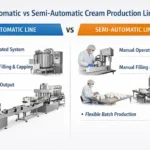
The automatic versus semi-automatic packaging machine comparison examines these trade-offs in more detail.
Review Changeover Requirements
Changeover includes all work needed to move from one product or package format to another.
Ask whether the machine requires:
- Guide-rail adjustments
- Filler-part changes
- New recipes
- Different sealing jaws
- Label-roll replacement
- Coding-message changes
- Conveyor-height adjustments
- Cap-handling changes
- Inspection-system setup
- Cleaning between products
A machine that runs one package efficiently may still be unsuitable when a facility has many short production runs.
Check Floor Space and Access
A layout must provide enough room for:
- Machine operation
- Guard doors
- Control panels
- Film and label loading
- Product replenishment
- Cleaning
- Maintenance
- Tool removal
- Reject collection
- Safe walkways
- Pallet and material movement
Small gaps between machines can become serious operating problems when technicians cannot reach sensors, motors, sealing assemblies, belts, or electrical enclosures.
Consider Utilities and Environment
Packaging equipment may require:
- Electrical power
- Compressed air
- Vacuum
- Steam
- Cooling water
- Extraction or ventilation
- Network connections
- Washdown-compatible services
The operating environment may include dust, moisture, temperature changes, cleaning chemicals, product residue, or airborne contamination. Equipment materials, enclosures, bearings, sensors, cables, and controls should be evaluated for the actual environment.
Plan Maintenance and Support
Before purchasing equipment, confirm:
- Which parts are considered wear items
- Recommended inspection intervals
- Lubrication requirements
- Availability of manuals and drawings
- Spare-parts lead times
- Local technical support
- Remote-support options
- Controls and software access
- Operator and technician training
- Required maintenance tools
The purchase price is only one part of equipment cost. Changeover labor, product loss, packaging-material waste, maintenance hours, replacement parts, utilities, downtime, and training also affect total cost of ownership.
Packaging-Line Integration Matters
Individual machines can operate correctly and still perform poorly as a line.
Integration problems often appear at machine interfaces:
- Containers reach the filler too closely together.
- Filled pouches fall over before coding.
- Labels are applied before condensation has cleared.
- A conveyor pushes excessive pressure into the capper.
- The case packer stops frequently because upstream accumulation is too small.
- A reject device cannot remove defective packages cleanly.
- A palletizer waits because case orientation changes at the sealer.
A line design should define product flow, control signals, machine speeds, accumulation logic, fault response, restart behavior, and safe access.
The equipment should also communicate clear operating states. Operators need to distinguish between a machine that is stopped by a fault, starved of incoming product, blocked by a downstream machine, waiting for material, or undergoing a planned stop.
Maintenance Priorities Across Packaging Equipment
Maintenance requirements vary, but many packaging machines depend on the same basic controls.
Routine Operator Checks
Operators may be assigned approved checks such as:
- Cleaning accessible product-contact or package-contact areas
- Inspecting guards and interlocks
- Checking belts, rollers, and guide rails
- Removing packaging debris
- Confirming sensor lenses are clean
- Checking air-pressure indicators
- Observing seals, labels, codes, and closures
- Reporting abnormal vibration, noise, heat, or leakage
- Recording minor stops and defects
Planned Technician Maintenance
Qualified personnel may inspect or service:
- Drive components
- Motors and gearboxes
- Electrical connections
- Pneumatic components
- Vacuum systems
- Bearings
- Chains and belts
- Sealing assemblies
- Temperature controls
- Pumps and valves
- Safety circuits
- Control-system backups
- Wear parts and tooling
Maintenance or repair involving guards, electrical systems, stored pressure, heat, motion, or other hazardous energy must follow the facility’s approved procedures. OSHA’s hazardous-energy standard covers servicing and maintenance in which unexpected startup, energization, or released stored energy could injure workers.
More equipment-care information is available in the packaging machine maintenance guides.
Safety, Sanitation, and Compliance
Packaging machines can contain moving belts, rollers, chains, rotating shafts, heated sealing surfaces, cutters, pneumatic actuators, robots, and high-voltage components.
OSHA requires appropriate safeguarding against hazards including points of operation, ingoing nip points, rotating parts, and other machine hazards. OSHA has also specifically stated that pinch points and moving parts on packaging and palletizing machinery must be guarded where they may cause injury.
Operators should not bypass guards, interlocks, emergency devices, or approved energy-control procedures. Repairs, electrical work, safety-system changes, and access to hazardous machine areas should be handled according to OEM manuals, site procedures, applicable requirements, and qualified-professional guidance.
Food, dietary supplement, pharmaceutical, cosmetic, and other controlled production environments may have additional equipment-design, cleaning, sanitation, material-control, labeling, and documentation requirements.
For human-food facilities covered by the relevant rules, FDA’s current good manufacturing practice provisions address equipment condition, cleaning, sanitation, food-contact surfaces, contamination prevention, and food-packaging materials.
Sanitation methods should be based on the product, equipment construction, facility procedures, OEM documentation, and applicable regulatory or quality-system requirements. A cleaning method that is suitable for one line may damage sensors, bearings, seals, lubricants, electrical components, or package-contact surfaces on another.
Common Packaging Equipment Planning Mistakes
Buying for Maximum Speed Instead of Stable Output
A high-speed machine provides little value when the upstream process cannot supply product consistently or downstream equipment cannot accept it.
Testing Only Ideal Packaging Materials
Production materials vary. Containers, caps, cartons, labels, and films should be tested across realistic tolerances and supply conditions.
Ignoring Changeover Time
A machine designed for long runs may be inefficient in a facility producing many short batches and package sizes.
Underestimating Product Handling
Fragile, sticky, dusty, flexible, top-heavy, or irregular products often require more handling development than expected.
Treating Conveyors as an Afterthought
Spacing, accumulation, pressure, transfer geometry, and container stability can determine whether separate machines operate successfully as one line.
Focusing Only on Purchase Price
Installation, controls integration, tooling, spare parts, training, validation, maintenance, utilities, cleaning, and lost production can materially affect the final investment.
Failing to Plan Safe Maintenance Access
Equipment that fits into the floor plan may still be difficult to clean, inspect, adjust, or repair safely.
Related Guides
- Packaging machinery buying guides
- Packaging machine comparisons
- Packaging applications by product and industry
- Packaging machinery troubleshooting guides
- End-of-line equipment
FAQ
What are the most common packaging machines in manufacturing?
The most common machines include fillers, cappers, sealers, form-fill-seal machines, wrappers, labelers, coding systems, conveyors, inspection machines, case packers, case sealers, palletizers, and stretch wrappers. The exact combination depends on the product and package format.
Does every packaging line need a filling machine?
No. Filling equipment is required when a measured product must be placed into a container, but some lines receive products that are already packaged or handle discrete items through wrapping, cartoning, bundling, or case-packing processes.
What is the difference between packaging equipment and processing equipment?
Processing equipment changes, prepares, mixes, cooks, cuts, or otherwise transforms a product. Packaging equipment contains, protects, identifies, groups, or prepares the product for handling and distribution. Some production systems closely integrate both functions.
How do I choose the right automation level?
Start with the required output, production schedule, labor availability, package variety, changeover frequency, floor space, operator skills, maintenance resources, and available budget. Semi-automatic machines can suit flexible lower-output operations, while integrated automatic equipment is generally considered when consistent higher output justifies the added complexity.
Which packaging machine usually controls line speed?
There is no universal answer. The effective constraint may be the filler, bagger, cartoner, case packer, inspection station, manual operation, or even product supply. Sustainable line output depends on the combined system, not only the rated speed of one machine.
When should a qualified technician inspect packaging equipment?
Stop and follow site procedures when there are damaged guards, repeated safety trips, exposed or suspected electrical faults, uncontrolled motion, overheating, unusual vibration, leaking hazardous materials, damaged pressure components, or a fault requiring access to a hazardous area. Use the OEM manual, approved energy-control procedures, and qualified personnel.
References and Further Reading
- PMMI — Fundamentals of Packaging Machinery. Industry training overview covering bagging, wrapping, cartoning, coding, labeling, conveying, filling, closing, inspection, palletizing, robotics, and related equipment.
- PMMI — Packaging Machinery Product Categories. Detailed machinery classification covering feeders, conveyors, sealers, coders, inspection equipment, labelers, palletizers, and wrapping machinery.
- OSHA — 29 CFR 1910.212, General Requirements for All Machines. Requirements concerning machine guarding and exposure to hazardous moving parts.
- OSHA — 29 CFR 1910.147, The Control of Hazardous Energy. Requirements addressing unexpected startup, energization, and release of stored energy during servicing and maintenance.
- GS1 — GS1 General Specifications and Barcode Resources. Standards and guidance for identification keys, barcode use, quality, and placement.
- FDA and eCFR — 21 CFR Part 117 Current Good Manufacturing Practice. Requirements and official information concerning equipment, sanitation, food-contact surfaces, and food-packaging materials in covered human-food operations.