
Choosing between a shrink wrap machine and a stretch wrapping machine isn’t just a question of which film to buy. The decision affects product protection, pallet stability, labor requirements, energy consumption, package appearance, and how each machine fits into your packaging line.
Here’s the core distinction: a shrink wrap machine uses heat to contract film tightly around a product or group of products, while a stretch wrapping machine uses film tension — without heat — to secure a palletized load. Shrink wrapping typically happens earlier in the line, closer to the product itself. Stretch wrapping happens at the end of the line, after cartons, cases, bags, or bundles have been stacked on a pallet.

The better question isn’t “Which machine is superior?” It’s: “What are you trying to protect, present, or stabilize?”
Quick Answer: Which Machine Should You Use?
Use a shrink wrap machine when you need a tight, clean film package around individual products, multipacks, trays, bundles, printed items, consumer goods, or retail-ready packs.
Use a stretch wrapping machine when you need to stabilize pallet loads for warehouse movement, storage, truck transport, or distribution.
Many packaging lines use both. A beverage operation, for example, may shrink wrap bottles into multipacks, then stretch wrap multiple cases or trays on a pallet before shipping.
Shrink Wrap Machine vs Stretch Wrapping Machine: Comparison Table
| Factor | Shrink Wrap Machine | Stretch Wrapping Machine |
|---|---|---|
| Main purpose | Wraps and tightens film around a product, bundle, tray, or multipack | Secures palletized loads for handling, storage, and transport |
| How it works | Film is sealed around the item, then heat causes it to shrink tightly | Stretch film is pulled under tension and wrapped around the load |
| Uses heat? | Yes | No |
| Typical packaging stage | Product, bundle, retail, or multipack packaging | End-of-line pallet packaging |
| Common products | Bottles, cans, boxes, books, trays, printed goods, cosmetics, food packs, multipacks | Cartons, cases, bags, drums, mixed pallets, warehouse loads |
| Main benefit | Clean appearance, product containment, dust protection, tamper visibility | Load stability, reduced shifting, safer pallet handling, transport protection |
| Film type | Shrink film — polyolefin, polyethylene, or PVC depending on application | Stretch film — usually LLDPE-based |
| Equipment examples | L-bar sealer, side sealer, sleeve wrapper, shrink tunnel, shrink bundler | Turntable wrapper, rotary arm wrapper, orbital wrapper, automatic pallet wrapper |
| Best for retail presentation | Usually yes | Usually no |
| Best for pallet stability | Limited | Yes |
| Typical limitation | Requires heat, correct film selection, good seal quality, and product heat tolerance | Does not create a tight, retail-style product package |
| Common line location | Before case packing, after product grouping, or before cartoning | After palletizing or before warehouse dispatch |
What Is a Shrink Wrap Machine?
A shrink wrap machine applies shrink film around a product or product group, seals the film, then uses heat to shrink the film tightly into place. The heat step is handled by a shrink tunnel, heat chamber, or — in manual setups — a heat gun. Shrink tunnels use heated airflow and conveyor movement to contract the film evenly around the product.
Common Types of Shrink Wrap Machines
L-Bar Sealer with Shrink Tunnel An L-bar sealer cuts and seals film around individual products or small groups. It’s widely used for books, boxed goods, trays, cosmetics, and printed materials, and suits lower-to-medium volume lines well.
Side Sealer Shrink Wrapper Side sealers are better suited for continuous operation and longer products. They generally handle higher throughput than basic L-bar setups and work well where product length varies.
Sleeve Wrapper A sleeve wrapper applies film around a product or bundle without fully enclosing every side. It’s common for beverage multipacks, canned goods, trays, and grouped products.
Shrink Bundling Machine Shrink bundlers are often used for heavier products or multipacks. Polyethylene shrink film is applied around the bundle and tightened in a shrink tunnel.
What Is a Stretch Wrapping Machine?
A stretch wrapping machine applies stretch film around a pallet load using controlled film tension. Unlike shrink wrapping, no heat is involved. The film is stretched mechanically and wrapped around the load to create containment force. Stretch wrappers can be manual, semi-automatic, or fully automatic depending on production volume and line design.
Common Types of Stretch Wrapping Machines
Turntable Stretch Wrapper The pallet sits on a rotating turntable while film is applied around the load. This is a common choice in warehouses and moderate-volume packaging areas.
Rotary Arm Stretch Wrapper The pallet stays stationary while a rotating arm moves around it. This is useful for unstable, very heavy, or irregular loads that shouldn’t rotate on a turntable.
Automatic Stretch Wrapper Automatic machines can integrate with conveyors, palletizers, and warehouse systems. They reduce manual labor and improve wrap consistency in higher-volume operations.
Orbital Stretch Wrapper Orbital wrappers apply film horizontally around long or irregular products. They’re commonly used for pipes, profiles, doors, panels, timber, and similar items.
The Core Difference: Product Packaging vs Pallet Load Containment
The most important difference comes down to what you’re trying to accomplish.
A shrink wrap machine is chosen when the package itself needs to look finished, compact, protected, or retail-ready — the focus is on the product or product group.
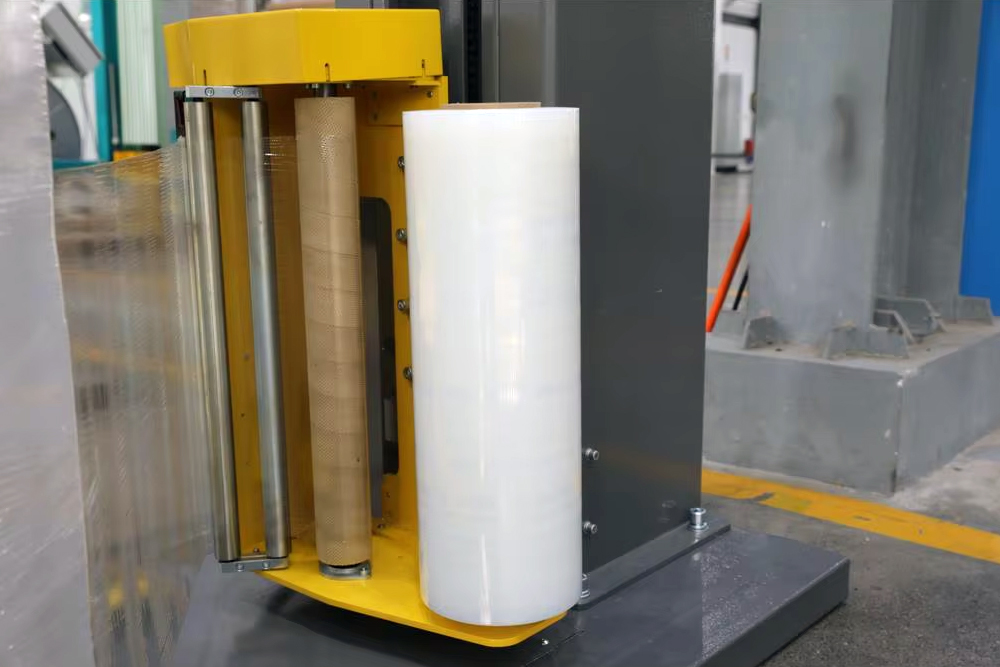
A stretch wrapping machine is chosen when an operation needs to move a pallet safely through storage, forklift handling, loading, and transport — the focus is on keeping the pallet load intact.
A typical workflow might look like this:
- A tray of bottled water is shrink wrapped into a multipack.
- Multiple shrink-wrapped trays are stacked on a pallet.
- That pallet is stretch wrapped before shipment.
These two machines aren’t competing. They solve different problems at different points in the same workflow.
How Shrink Wrapping Works in a Packaging Line
A typical shrink wrapping process may include:
- Product feeding or manual placement
- Film wrapping around the product or bundle
- Film sealing and cutting
- Transfer into a shrink tunnel
- Heat shrinking
- Cooling and discharge
- Downstream case packing, labeling, or palletizing
Shrink wrapping is sensitive to film selection, sealing temperature, tunnel temperature, conveyor speed, airflow, and product shape. A poor setup can cause wrinkles, weak seals, burn holes, dog ears, ballooning, or uneven shrink.
Example: A cosmetics brand may use an L-bar sealer and shrink tunnel to wrap boxed skincare products. The film improves shelf appearance and protects the carton from dust and handling marks.
Example: A beverage plant may use a sleeve wrapper and shrink tunnel to create multipacks of bottles or cans, which are then conveyed to case packing or palletizing.
How Stretch Wrapping Works in a Packaging Line
A typical stretch wrapping process may include:
- Filled cartons or cases arrive from the packaging line
- Products are stacked manually or by a palletizer
- The pallet enters a stretch wrapping station
- Film is attached to the pallet or load
- Film is stretched and wrapped around the load
- Top, middle, and bottom wrap patterns are applied
- Film is cut and secured
- The pallet moves to storage, staging, or shipping
The key concept here is load containment. The stretch film needs to hold the load firmly enough to reduce movement during handling and transport. Some packaging guidelines use containment force measurements to evaluate whether a pallet is wrapped adequately for its load weight and stability conditions.
Example: A distribution center handling e-commerce cartons may use a semi-automatic turntable stretch wrapper. Operators place completed pallets on the turntable, start the cycle, and move wrapped pallets to outbound staging.
Example: A high-speed food plant may use a palletizer followed by an automatic stretch wrapper integrated with conveyors, labelers, and warehouse handling systems.
When to Choose a Shrink Wrap Machine
A shrink wrap machine is usually the right choice when you need:
Retail-Ready Presentation Shrink film creates a clean, tight package that helps products look organized and protected on the shelf. This matters for consumer goods, printed materials, boxed products, gift sets, cosmetics, electronics accessories, and multipacks.
Product or Bundle Containment Shrink wrapping holds several items together as one sellable or transportable unit — beverage multipacks, canned food trays, tissue packs, notebooks, and promotional bundles are common examples.
Dust and Handling Protection Shrink film offers basic surface protection against dust, scuffs, and light handling contamination. It’s not a substitute for full protective packaging, but it improves surface protection where that’s the concern.
Tamper Visibility Some shrink packaging formats make tampering more visible, particularly when used with shrink bands, sleeves, or fully enclosed film designs. The actual level of tamper evidence depends on the package design and film type.
Compact Packaging Shrink packaging often uses less bulky material than some carton or rigid overwrap options, depending on product and protection requirements.
When to Choose a Stretch Wrapping Machine
A stretch wrapping machine is usually the right choice when you need:
Pallet Stability Stretch wrapping is designed specifically to prevent pallet loads from shifting, leaning, or separating during movement.
Reduced Manual Wrapping Labor Hand wrapping pallets is physically demanding and often inconsistent. Semi-automatic and automatic stretch wrappers improve repeatability and reduce operator fatigue.
Warehouse and Transport Protection Stretch film helps protect palletized goods from dust, light moisture exposure, and handling disturbance. It also keeps labels and pallet contents together through the shipping process.
Consistent Film Control Machine stretch wrapping controls film tension, wrap count, pre-stretch, overlap, and top/bottom reinforcement more reliably than hand wrapping.
High-Volume End-of-Line Packaging For operations shipping many pallets per day, a stretch wrapper often becomes an essential part of the end-of-line system.
Practical Examples by Industry
Beverage Packaging Bottles or cans are typically shrink wrapped into multipacks using a sleeve wrapper and shrink tunnel. After the multipacks are stacked, the pallet is stretch wrapped for transport. Typical choice: both machines.
Food Manufacturing Frozen food cartons, snack trays, canned goods, and boxed food products often use shrink wrapping for grouping or presentation. Finished pallets use stretch wrapping before shipment. Typical choice: shrink wrap for bundles; stretch wrapper for pallets.
E-Commerce Fulfillment Individual parcels aren’t usually shrink wrapped unless there’s a specific protection or bundling need. Pallets of outbound cartons are commonly stretch wrapped before warehouse transfer or carrier pickup. Typical choice: stretch wrapping machine.
Printing and Publishing Books, magazines, calendars, and other printed materials are frequently shrink wrapped for protection and presentation. Typical choice: shrink wrap machine.
Building Materials and Long Products Long profiles, doors, panels, and pipes often use orbital stretch wrapping. Some products also use shrink film, but stretch wrapping is generally more practical for long or irregular loads. Typical choice: orbital stretch wrapper, depending on product geometry.
Cost and Operating Considerations
Equipment Cost Shrink wrap systems range from small manual sealers to fully automatic shrink bundling lines. Costs increase with speed, automation level, tunnel size, sealing system, and product handling requirements.
Stretch wrappers also span a wide range — from basic semi-automatic turntable machines to fully automatic conveyorized systems. Costs rise with load size, speed, pre-stretch capability, top-sheet options, safety guarding, and integration complexity.
Film Cost Shrink film and stretch film are different materials with different pricing, gauges, and performance profiles. Comparing their costs directly can be misleading because they serve entirely different purposes.
For shrink wrapping, film performance affects clarity, shrink force, puncture resistance, seal quality, and finished appearance. For stretch wrapping, film performance affects puncture resistance, cling, pre-stretch capability, containment force, and load stability.
Energy Use Shrink wrapping requires heat, so energy consumption is a meaningful operating factor. Stretch wrapping doesn’t require heat, though automatic systems still use power for motors, controls, and conveyors depending on configuration.
Labor Both manual shrink wrapping and manual pallet wrapping can be labor-intensive. Automation can improve consistency, but only if the machine is properly matched to product size, line speed, film type, and operator workflow.
Maintenance Shrink wrap machines need regular attention to sealing wires, knives, belts, tunnel airflow, heating elements, temperature controls, and film tracking.
Stretch wrappers require maintenance on film carriage rollers, pre-stretch gears or belts, turntable components, sensors, film clamps, cut-and-wipe systems, and load handling components.
Common Buying Mistakes
Mistake 1: Treating them as interchangeable Shrink wrap machines and stretch wrapping machines are not alternatives to each other. One packages products or bundles; the other secures pallet loads.
Mistake 2: Ignoring product heat sensitivity Shrink wrapping uses heat. Heat-sensitive products, labels, coatings, adhesives, or containers may need careful testing before committing to a shrink packaging format.
Mistake 3: Skipping load stability testing on a stretch wrapper A pallet may look wrapped but still be unstable. Load type, weight, stacking pattern, film tension, pre-stretch settings, and wrap pattern all affect containment.
Mistake 4: Buying only for today’s throughput Packaging lines often grow. If output may increase, check whether the machine can handle future speeds, product sizes, and automation upgrades before purchasing.
Mistake 5: Forgetting upstream and downstream equipment A shrink wrapper may need product spacing controls, infeed timing, discharge conveyors, labeling, or case packing integration.
A stretch wrapper may need pallet conveyors, palletizers, label applicators, scanners, forklift access, or warehouse traffic planning.
Mistake 6: Selecting film after the machine Film and machine should be evaluated together. Mismatched film-machine combinations can cause weak seals, film breaks, unstable loads, excess waste, or poor package appearance.
Decision Guide: Which One Fits Your Operation?
Choose a shrink wrap machine if your main goal is:
- Retail presentation
- Multipack or bundle packaging
- Dust or surface protection
- Clean individual product packaging
- Tray or sleeve wrapping
- Tight finished package appearance
Choose a stretch wrapping machine if your main goal is:
- Pallet stabilization
- Warehouse handling
- Shipping protection
- Reduced manual pallet wrapping labor
- Consistent end-of-line containment
- End-of-line automation
Choose both if your operation requires product-level packaging and pallet-level stabilization.
Final Verdict
A shrink wrap machine and a stretch wrapping machine solve different packaging problems and are rarely direct alternatives.
A shrink wrap machine is the right tool for wrapping products, bundles, trays, and multipacks with heat-shrunk film. Use it when appearance, grouping, and product-level protection matter.
A stretch wrapping machine is the right tool for securing pallet loads with tensioned film. Use it when load stability, warehouse handling, and shipping performance are the priorities.
For any packaging line, the choice comes down to where the problem is: at the product level or at the pallet level. If the product needs a finished film package, shrink wrapping is the answer. If the pallet needs to survive handling and transport, stretch wrapping is.
FAQ
Is shrink wrap the same as stretch wrap? No. Shrink wrap contracts when heat is applied. Stretch wrap is stretched mechanically under tension and wrapped around a load without heat. Shrink wrap is typically used for products or bundles; stretch wrap is used for pallets.
Can a shrink wrap machine wrap pallets? Some large shrink hooding or shrink bundling systems can handle pallet-sized loads, but this is quite different from standard product shrink wrapping. For most warehouse pallet applications, a stretch wrapping machine is the more common and practical choice.
Can a stretch wrapping machine replace a shrink wrap machine? Generally, no. A stretch wrapper secures pallet loads but doesn’t create a tight, retail-style package around individual products.
Which machine is better for beverage packaging? It depends on the stage. Shrink wrapping is commonly used for bottle or can multipacks. Stretch wrapping comes later, securing palletized cases or trays for transport.
Which machine is better for e-commerce warehouses? Stretch wrapping is usually more relevant, since outbound cartons are typically stacked on pallets. Shrink wrapping may come into play for special kits, bundles, or products that need added protection.
Does shrink wrapping use more energy than stretch wrapping? Generally yes, because heat is required. Stretch wrapping doesn’t use heat, though automatic stretch wrappers still consume electrical power for motors and controls.
Which machine gives better product appearance? Shrink wrapping typically produces a cleaner, more finished look at the product level. Stretch wrapping is designed for pallet containment, not retail presentation.
What should I test before buying either machine? For shrink wrapping: product size range, film type, seal quality, tunnel temperature, finished appearance, and heat sensitivity. For stretch wrapping: pallet stability, load weight, film break rate, containment force, wrap pattern, and handling conditions.