
When a filling machine is not filling accurately, the problem can quickly turn into wasted product, rejected batches, messy containers, and unnecessary downtime. Sometimes the issue looks obvious: bottles are overfilled, underfilled, dripping, or foaming. Other times, the problem is more subtle, with small variations that only show up during quality checks.
The good news is that inaccurate filling is usually not random. In most cases, it comes from a few common areas: calibration, product flow, worn parts, air pressure, nozzles, supply conditions, or machine setup.
This guide walks through the most common reasons a filling machine loses accuracy and what you can do to bring the line back under control.
Why Is My Filling Machine Not Filling Accurately?
A filling machine may not fill accurately because the machine is not calibrated correctly, the product flow is unstable, the nozzles are clogged or dripping, seals and valves are worn, air pressure is fluctuating, or the product itself changes in viscosity, density, or temperature.
For liquid filling machines, even a small change in product viscosity or air pressure can affect the final fill volume. For powders and granules, product flowability, vibration, and dosing consistency can also cause inaccurate fills.
Before replacing major components, it is usually best to start with simple checks: machine leveling, calibration, nozzle condition, air pressure, and product supply stability.
1. Product Viscosity or Temperature Is Not Stable
One of the most common reasons for inaccurate filling is a change in the product itself.
If you are filling liquids, creams, sauces, oils, gels, or chemical products, the way the product flows can change with temperature, viscosity, density, or trapped air. A product that flows smoothly in the morning may become thicker later in the day if the temperature drops. A foamy or aerated product may also lead to inconsistent fills.
Common signs
You may notice:
- Fill volumes changing from batch to batch
- More variation with thicker products
- Air bubbles inside the container
- Foaming or splashing during filling
- Better accuracy at slower speeds
How to fix it
Keep the product conditions as stable as possible. If temperature affects viscosity, use a temperature-controlled tank or hopper. If the product contains air bubbles, allow it to settle or use a deaeration process before filling.
For products with significant batch-to-batch differences, recalibrate the machine when changing batches. This is especially important for piston fillers, gravity fillers, flow meter fillers, and pump filling systems.
2. The Filling Machine Is Not Level
This is a simple issue, but it is often overlooked.
If the machine is not sitting level on the production floor, liquid distribution can become uneven. This may affect the fill level across different heads, especially on multi-head liquid filling machines.
A machine can become unlevel after relocation, installation, floor movement, or improper adjustment of leveling feet.
Common signs
You may see:
- One side of the machine filling slightly higher or lower
- Different fill results between filling heads
- Accuracy problems after moving the machine
- Inconsistent liquid levels even after calibration
How to fix it
Check the machine with a level and adjust the leveling feet. After leveling, run a short test cycle and compare containers from each fill head.
This should be one of the first checks when a filling machine is not filling accurately, especially if the machine has recently been installed, moved, or serviced.
3. Worn Seals, Valves, Pistons, or Nozzles
Filling machines rely on wear parts. Over time, seals, O-rings, gaskets, valves, pistons, springs, hoses, and nozzles can degrade. Even minor wear can cause leakage, dripping, air intake, or uneven dosing.
For example, a worn nozzle seal may allow product to drip after filling. A weak valve may not shut off cleanly. A damaged piston seal may reduce dosing precision. A cracked hose or loose connection may pull air into the product path.
Common signs
You may notice:
- Nozzle dripping after the fill cycle
- Product leaking around fittings
- Underfilled containers
- Random fill variation
- Air bubbles in the filled product
- Accuracy getting worse over time
How to fix it
Inspect all common wear parts and replace damaged or aging components. Pay special attention to:
- Nozzle tips
- Anti-drip seals
- O-rings
- Piston seals
- Valve seats
- Springs
- Product hoses
- Clamps and fittings
Use a preventive maintenance schedule instead of waiting for parts to fail. In many cases, replacing a small seal is much cheaper than losing product during a long production run.
4. Poor Calibration or Wrong Fill Settings
If the machine is not calibrated correctly, the set fill volume may not match the actual output. This can happen after product changes, bottle size changes, maintenance, software adjustment, or long-term machine drift.
Calibration problems are especially common when operators rely on old settings for a new product or container.
Common signs
You may see:
- All containers are consistently overfilled or underfilled
- Fill accuracy changes after switching products
- The machine display shows the correct setting, but actual output is wrong
- Different filling heads produce different volumes
- Quality checks fail even though the machine appears to run normally
How to fix it
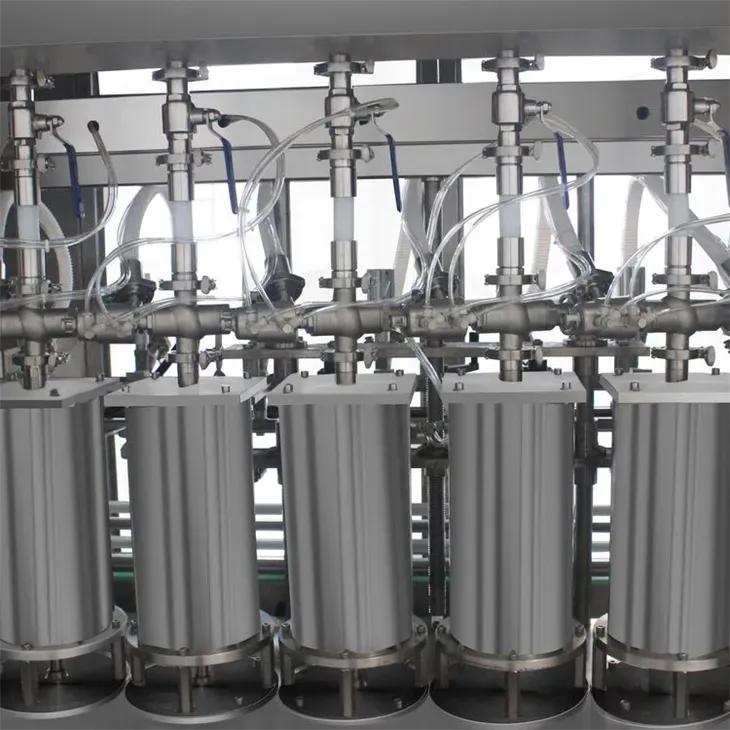
Recalibrate the machine using a reliable measuring method, such as a certified scale, measuring cylinder, or approved test standard.
Run a sample test across multiple cycles, not just one container. For example, check 20 to 30 fills and compare the results against your target tolerance.
If your machine uses PLC controls or recipe settings, make sure the correct product recipe is loaded. For gravity fillers, check individual fill times for each head. For piston or pump fillers, verify stroke length, dosing time, and pump speed.
5. Air Pressure or Vacuum Is Unstable
Many automatic filling machines depend on compressed air to control pistons, valves, cylinders, or nozzle movement. If air pressure is unstable, the machine may not complete each stroke consistently.
This can lead to overfilling, underfilling, delayed shutoff, nozzle dripping, or irregular filling speed.
Common signs
You may notice:
- The machine starts or stops irregularly
- Fill volume changes during production
- Pneumatic cylinders move inconsistently
- The machine performs better when running slowly
- Pressure gauges fluctuate during operation
How to fix it
Check the air compressor, pressure regulator, air tank, filters, and pneumatic lines. Make sure the machine receives stable air pressure within the manufacturer’s recommended range.
Also inspect for air leaks. A small leak may not stop the machine completely, but it can reduce filling accuracy.
If your system uses vacuum filling or overflow filling, check vacuum stability and return lines as well. Blocked or submerged return tubing can create back pressure and affect the filling process.
6. Product Supply Is Not Consistent
A filling machine can only be accurate if the product supply is stable. If the supply tank level changes too much, the pump pulses, or the feed pressure fluctuates, the machine may deliver inconsistent amounts.
This is common when the supply tank runs too low, the pump cycles during filling, or the product return line creates back pressure.
Common signs
You may see:
- Accuracy is worse when the tank is low
- Fill levels change when the pump turns on
- Some containers are accurate while others are not
- Flow rate changes during the production run
- Overflow fillers show uneven return flow
How to fix it
Use a constant-level tank or buffer tank when possible. Install level sensors and feedback controls to maintain stable supply conditions.
For automatic liquid fillers, check whether fill hold and supply hold settings are enabled. These settings help prevent the resupply pump and fill cycle from running at the same time, which can affect accuracy.
Also inspect the pump. A pulsing or unstable pump can cause inconsistent filling, especially for low-viscosity liquids or products filled by time.
7. Filling Speed, Timing, or Conveyor Synchronization Is Wrong
Running the machine too fast can reduce accuracy. When the fill cycle is too short, the product may not settle properly, the valve may not shut off cleanly, or the container may move before filling is complete.
This issue is common when a production line is pushed for higher output without adjusting timing, nozzle height, conveyor indexing, or container positioning.
Common signs
You may notice:
- More spillage at higher speeds
- Containers moving before filling finishes
- Splashing or foaming
- Inconsistent fills only during fast production
- Better results during slow manual testing
How to fix it
Slow the machine down and observe whether accuracy improves. If it does, the issue is likely related to speed, timing, or synchronization.
Check:
- Fill start timing
- Fill stop timing
- Pump duration
- Nozzle dive timing
- Conveyor indexing
- Container position under each nozzle
- Sensor response time
Adjust the filling cycle so the product has enough time to dispense cleanly and settle before the container moves forward.
Quick Troubleshooting Table
| Problem | Possible Cause | Recommended Fix |
|---|---|---|
| Underfilled containers | Poor calibration, air intake, low supply level | Recalibrate, inspect hoses, stabilize tank level |
| Overfilled containers | Wrong fill time, delayed shutoff, valve issue | Adjust fill timing and inspect shutoff valves |
| Inconsistent fill levels | Machine not level, unstable pressure, product variation | Level machine, stabilize air pressure, control viscosity |
| Nozzle dripping | Worn seal, pressure imbalance, residue buildup | Replace seals, adjust pressure, clean nozzles |
| Air bubbles | Loose connection, high filling speed, pump leak | Tighten fittings, reduce speed, inspect pump and hoses |
| Product spillage | Sensor misalignment, wrong nozzle height, fast conveyor | Realign sensors, adjust nozzle height, slow conveyor |
| Accuracy changes during production | Tank level fluctuation, pump cycling, temperature change | Use buffer tank, enable supply hold, control temperature |
A Practical Diagnostic Workflow
When your filling machine is not filling accurately, do not adjust everything at once. A better approach is to isolate the problem step by step.
Start with the fastest checks first:
- Check whether the machine is level.
- Confirm the correct recipe or fill setting is selected.
- Recalibrate the fill volume or fill weight.
- Inspect nozzles for clogging, dripping, or damage.
- Check hoses, clamps, and product pathway connections.
- Monitor air pressure or vacuum stability.
- Stabilize product temperature, viscosity, and tank level.
- Reduce machine speed and compare fill accuracy.
- Run a controlled test batch and record the results.
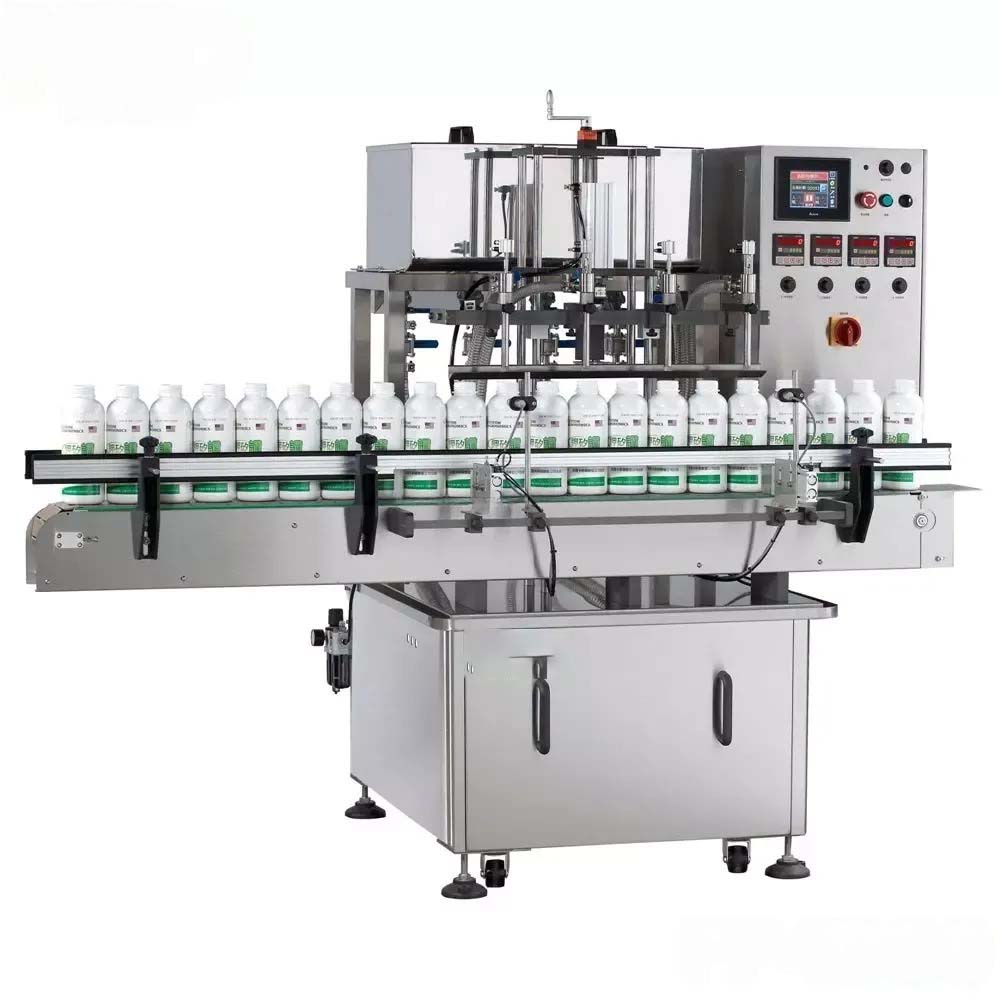
If your production process requires tight tolerance, record sample data and analyze variation over multiple cycles. This helps separate random variation from a clear mechanical or process-related problem.
How to Prevent Filling Accuracy Problems
The best way to avoid inaccurate filling is to treat accuracy as part of routine production control, not just emergency troubleshooting.
Create a calibration schedule
Calibrate the machine regularly, especially after product changes, container changes, maintenance, or long shutdowns.
Clean nozzles and product paths
Residue buildup can restrict flow and cause dripping. Clean filling heads, valves, hoses, and pumps according to the product type and hygiene requirements.
Replace wear parts before failure
Seals, O-rings, gaskets, and valve parts should be replaced on a planned schedule. Waiting for visible leakage usually means accuracy has already been affected.
Train operators properly
Operators should know how to recognize early warning signs, such as dripping, foaming, uneven fill levels, pressure changes, or abnormal machine movement.
Keep product conditions stable
Control temperature, viscosity, air bubbles, and supply pressure as much as possible. Stable product conditions lead to stable fill results.
Final Thoughts
If your filling machine is not filling accurately, the cause is usually not a mystery. Most accuracy problems come from calibration drift, worn parts, unstable air pressure, inconsistent product supply, nozzle issues, or incorrect timing.
Start with the simple checks: level the machine, verify calibration, inspect nozzles, tighten product pathway connections, and monitor air pressure. Then move on to product viscosity, supply tank stability, pump behavior, and timing adjustments.
A filling machine performs best when the product, machine, and operating process are all stable. Once you identify which part of the system is changing, accurate filling becomes much easier to restore.
FAQ
Why is my filling machine not filling accurately?
A filling machine is usually not filling accurately because of poor calibration, worn seals, clogged nozzles, unstable air pressure, product viscosity changes, or inconsistent product supply. Start by checking calibration, machine leveling, nozzle condition, and air pressure.
How do I fix inconsistent fill levels?
First, make sure the machine is level. Then recalibrate the machine, inspect nozzles and seals, check for loose hose connections, and confirm stable air pressure. If the product changes in viscosity or temperature, adjust the machine settings accordingly.
Can clogged nozzles cause inaccurate filling?
Yes. Clogged or partially blocked nozzles can restrict product flow and create underfilled containers, dripping, splashing, or uneven fill levels. Regular cleaning is essential, especially for thick, sticky, foamy, or particulate products.
How often should a filling machine be calibrated?
Calibration frequency depends on the product, machine type, and production tolerance. Many facilities check calibration daily or weekly, and always after changing products, containers, fill volume, or key machine components.
Why does my filling machine overfill bottles?
Overfilling may be caused by incorrect fill time, delayed valve shutoff, worn seals, wrong pump settings, sensor misalignment, or excessive pressure. Check fill cycle timing, nozzle shutoff performance, and calibration first.
Why does my filling machine underfill containers?
Underfilling can happen when nozzles are clogged, air enters the product line, the supply tank level is too low, pump pressure is unstable, or the machine is calibrated incorrectly. Inspect the product pathway and run a measured test batch.
Can air pressure affect filling accuracy?
Yes. Pneumatic filling machines rely on stable compressed air. If air pressure fluctuates, pistons, valves, and cylinders may not move consistently, causing inaccurate fills. Check the regulator, compressor, air lines, and pressure gauges.
Does product viscosity affect filling accuracy?
Yes. Thicker products often require different fill speeds, pump settings, nozzle sizes, or temperature control. If viscosity changes during production, fill accuracy can change as well. Keeping the product temperature stable can help improve consistency.