

At first glance, shrink-wrapped products and vacuum-packed products can look surprisingly similar. Both may use clear plastic film. Both can fit tightly around the product. Both often use heat sealing. And from the outside, both can give the impression of a clean, protective, almost airtight package.
But when you compare a shrink wrap machine vs vacuum packaging machine, you are actually looking at two very different packaging systems.
A shrink wrap machine wraps a product with plastic film and uses heat to shrink the film tightly around it. A vacuum packaging machine removes air from inside the package before sealing it. That one difference—whether the air is removed or not—changes almost everything: shelf life, food safety, material thickness, equipment type, cost, and ideal application.
For businesses choosing packaging equipment, understanding this difference can prevent expensive mistakes. A shrink wrap machine may be perfect for retail display, bundled products, bottles, books, cosmetics, or electronics. A vacuum packaging machine is usually the better choice for meat, seafood, cheese, vegetables, ready meals, and other products that need stronger oxygen protection.
Let’s break it down in a practical way.
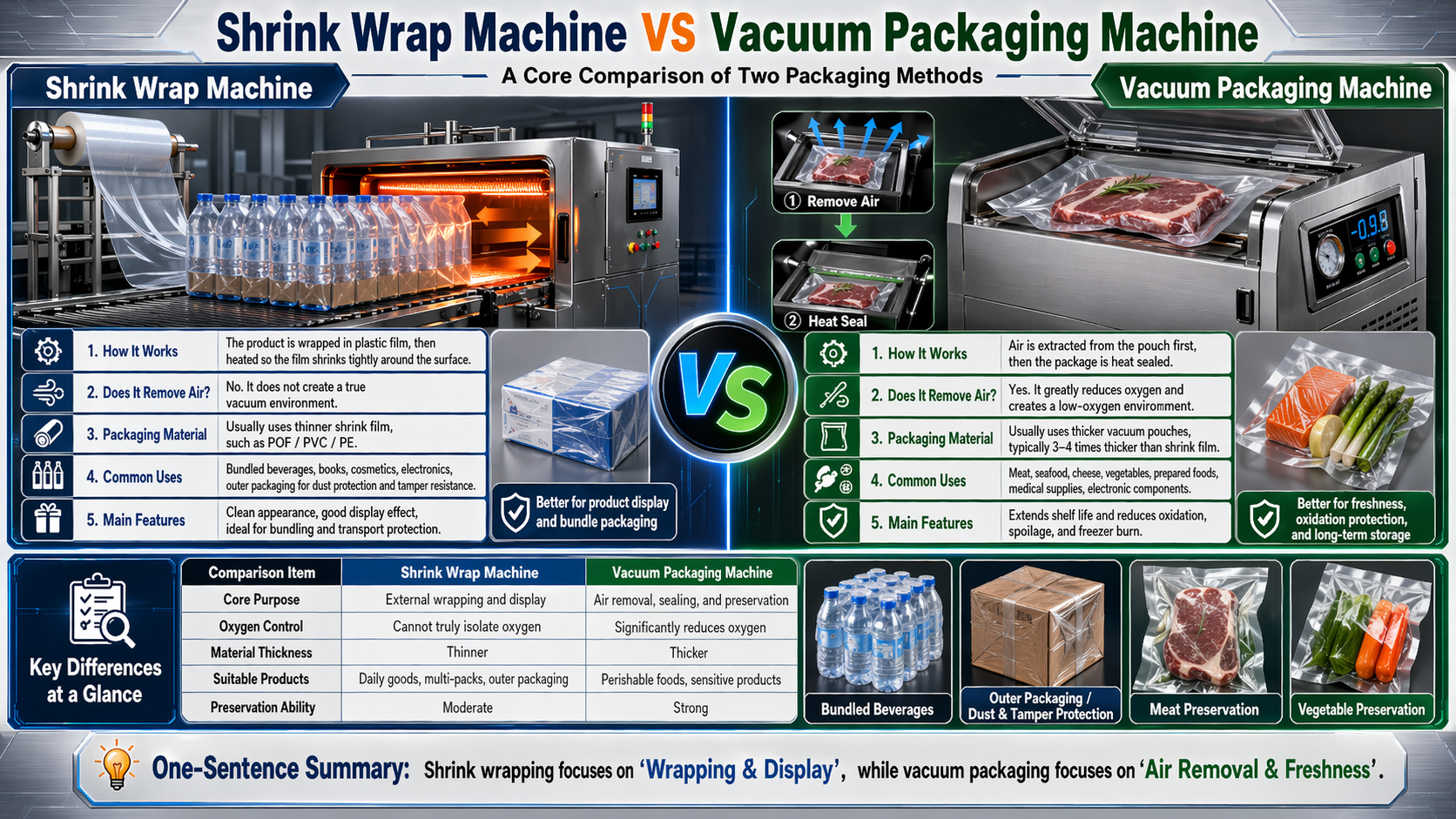
Shrink Wrap Machine vs Vacuum Packaging Machine: Quick Comparison
| Feature | Shrink Wrap Machine | Vacuum Packaging Machine |
|---|---|---|
| Main function | Wraps product in film and shrinks it with heat | Removes air from the package and seals it |
| Oxygen removal | No true oxygen removal | Yes, removes most or nearly all air |
| Finished look | Tight, clear outer layer | Tight, compressed, air-free package |
| Common materials | POF, PVC, PE shrink film | PA/PE vacuum pouches or vacuum bags |
| Material thickness | Usually thinner film | Usually 3–4 times thicker than shrink film |
| Best for | Retail products, bundles, shipping protection | Food preservation and moisture-sensitive products |
| Food shelf life | Moderate protection | Strong shelf-life extension |
| Protection level | Dust, handling, light moisture, tamper resistance | Oxygen, moisture, freezer burn, microbial growth |
| Equipment | Shrink tunnel, L-bar sealer, sleeve wrapper, heat gun systems | Chamber vacuum machine, external vacuum sealer, thermoforming vacuum machine |
| Interchangeable? | No | No |
The simplest way to remember it is this:
Shrink wrapping improves product protection and presentation. Vacuum packaging improves preservation.
What Is a Shrink Wrap Machine?
A shrink wrap machine uses plastic shrink film to cover a product. Once the product is wrapped and sealed, heat is applied. The film then shrinks tightly around the item, creating a neat and protective outer layer.
Depending on the production scale, shrink wrapping can be done with:
- Manual shrink wrapping tools
- L-bar sealers
- Heat shrink tunnels
- Sleeve wrapping machines
- Automatic shrink wrapping lines
Shrink wrapping is widely used because it is flexible, cost-effective, and visually attractive. The clear film allows customers to see the product, while the tight finish makes the item look clean and professionally packaged.
You often see shrink wrapping on:
- Bottled drinks
- Books and magazines
- DVDs and boxed products
- Cosmetics
- Toys
- Electronics
- Cartons and multipacks
- Candy and snacks
- Large products during transport
However, shrink wrapping does not create a true vacuum seal. The film may fit tightly around the product, but air can still remain inside or pass through small vent holes used during the shrinking process.
That means shrink wrapping is not the best choice when the main goal is long-term food preservation.
What Is a Vacuum Packaging Machine?
A vacuum packaging machine removes air from the package before sealing it. The product is placed inside a vacuum pouch or bag, the machine extracts the air, and then the opening is sealed with heat.
This creates a much more protective package because oxygen is one of the main causes of food spoilage. By reducing oxygen inside the package, vacuum packaging can slow oxidation, discoloration, freezer burn, and the growth of many aerobic bacteria and molds.
Vacuum packaging machines are commonly used for:
- Meat
- Poultry
- Fish and seafood
- Cheese
- Vegetables
- Ready-to-eat meals
- Dry foods
- Grains
- Nuts
- Medical products
- Moisture-sensitive electronics
There are several types of vacuum packaging equipment, including:
- Tabletop vacuum sealers
- Chamber vacuum packaging machines
- Double-chamber vacuum machines
- Continuous vacuum packaging machines
- Thermoforming vacuum packaging lines
Compared with shrink wrapping, vacuum packaging usually requires thicker, stronger packaging materials. Vacuum pouches often use PA/PE materials because they need to resist punctures, moisture, and oxygen transmission.
The Biggest Difference: Air Removal
The most important difference between the two systems is simple:
A vacuum packaging machine removes air. A shrink wrap machine does not.
This is where many people get confused. A shrink-wrapped package can look tight, smooth, and sealed. But that does not mean it is oxygen-free.
In shrink wrapping, the film shrinks around the product when heated. Small vent holes may be made in the film so trapped air can escape during the shrinking process. These holes help the film shrink properly, but they also mean the package is not completely sealed from outside air.
In vacuum packaging, the machine actively removes air from the pouch before sealing. This makes it much more suitable for preserving food freshness.
For example:
- Shrink wrapping can make a box of tea look clean and retail-ready.
- Vacuum packaging can help preserve raw meat in cold storage.
Both are useful, but they solve different problems.
Difference in Packaging Materials
Another major difference is the film or pouch material.
Shrink wrapping usually uses thinner plastic film, such as:
- POF shrink film
- PVC shrink film
- PE shrink film
These films are designed to shrink when heated. They are flexible, clear, and often used for retail display or product bundling.
Vacuum packaging uses thicker bags or pouches, often made with:
- Polyamide, also called PA
- Polyethylene, also called PE
- Multi-layer barrier materials
Vacuum bags are usually much thicker than shrink wrap film. In many cases, they can be three to four times thicker. This added strength is important because vacuum packaging needs to maintain a sealed, low-oxygen environment around the product.
So, when comparing a shrink wrap machine vs vacuum packaging machine, the material is not just a small detail. It directly affects protection, shelf life, durability, and cost.
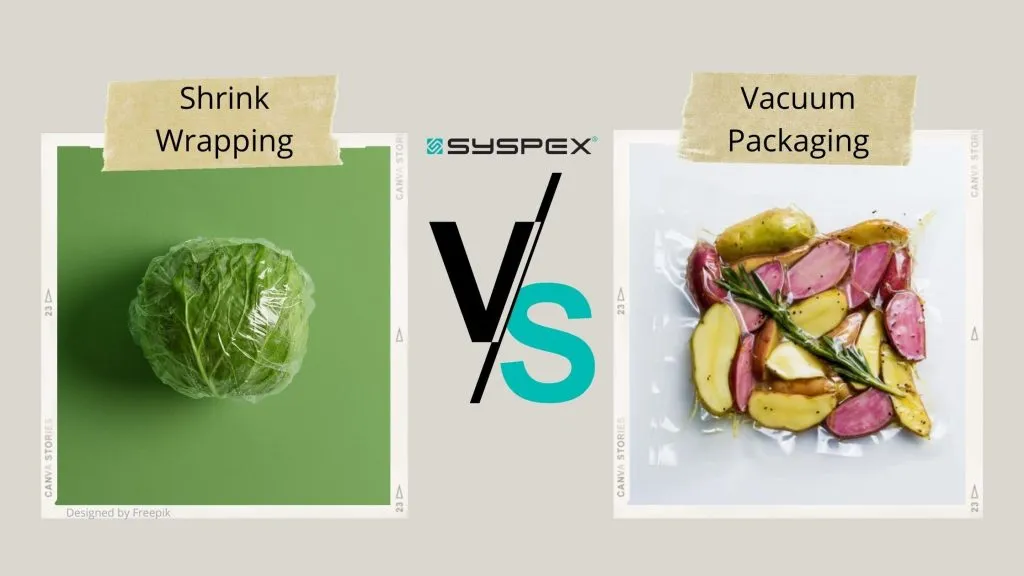
Difference in Packaging Equipment
Shrink wrap machines and vacuum packaging machines are not interchangeable.
A shrink wrap machine is designed to wrap, seal, and heat-shrink film around a product. It does not remove oxygen from inside the package.
A vacuum packaging machine is designed to extract air from a pouch or chamber before heat sealing. It does not shrink film around a product in the same way a shrink tunnel does.
This matters because some buyers assume they can use one machine for both purposes. In most cases, they cannot.
For example, if your factory needs to package frozen steaks, a shrink wrap machine will not provide the same preservation effect as a vacuum packaging machine. If your business needs to bundle water bottles for retail display, a vacuum packaging machine would usually be unnecessary and impractical.
The machine should match the packaging goal.
Which One Is Better for Food Packaging?
Both systems can be used in food packaging, but they are not equal in terms of preservation.
A vacuum packaging machine is usually better for foods that are sensitive to oxygen, moisture, oxidation, or freezer burn. This includes meat, seafood, cheese, vegetables, and prepared meals.
Shrink wrapping can be suitable for foods that mainly need outer protection, retail presentation, or product grouping. It is often used for candies, bakery boxes, beverage packs, and some dry goods.
Here is the practical difference:
Choose vacuum packaging when freshness and shelf life matter most.
Choose shrink wrapping when appearance, bundling, and surface protection matter most.
For perishable food, vacuum packaging has the clear advantage because it removes oxygen and creates a stronger barrier. For non-perishable retail items, shrink wrapping is often more economical and visually appealing.
Which One Is Better for Non-Food Products?
For non-food products, shrink wrapping is often the more common choice.
It is widely used for:
- Books
- Gift boxes
- Cosmetics
- Toys
- Stationery
- Electronics
- Hardware
- Bottled products
- Multipacks
- Cartons
Shrink wrapping gives products a clean retail look, protects against dust and handling, and can help prevent tampering. It is also efficient for wrapping large quantities of products at relatively low cost.
Vacuum packaging can still be used for non-food products, especially when moisture protection is important. For example, some electronic components, medical items, and precision parts may benefit from vacuum packaging.
But for general retail packaging, shrink wrapping is usually more practical.
Shelf Life: Vacuum Packaging Has the Advantage
If shelf life is your main concern, vacuum packaging is usually the stronger option.
Because vacuum packaging removes air, it helps slow down:
- Oxidation
- Mold growth
- Bacterial growth
- Food discoloration
- Freezer burn
- Flavor loss
Shrink wrapping can protect products from dust, moisture, and handling damage, but it does not provide the same oxygen barrier.
This is why vacuum packaging is common in meat processing plants, seafood factories, cheese production, ready-meal packaging, and cold-chain food distribution.
Shrink wrapping is more common where visual presentation and physical protection are the priority.
Cost Considerations
Shrink wrapping is often more cost-efficient for high-volume retail packaging and large product bundles. The film is usually thinner, and the equipment can be relatively economical depending on the automation level.
Vacuum packaging may have higher material and equipment costs. Vacuum pouches are thicker, and the machines are more specialized. However, the higher cost can be justified when the product needs extended shelf life or stronger protection.
In other words:
- Shrink wrapping may save money on presentation packaging.
- Vacuum packaging may save money by reducing food waste and spoilage.
The better choice depends on what kind of loss you are trying to prevent.
How to Choose the Right Machine
When choosing between a shrink wrap machine and a vacuum packaging machine, ask these questions:
1. Is the product perishable?
If yes, vacuum packaging is usually the better option, especially for meat, seafood, cheese, and ready meals.
2. Do you need to remove oxygen?
If oxygen removal is important, choose a vacuum packaging machine. Shrink wrapping does not create a true vacuum.
3. Is retail appearance the main goal?
If you want a clean, glossy, professional-looking package for display, shrink wrapping may be the better choice.
4. Are you bundling multiple items together?
Shrink wrapping is commonly used for multipacks, bottles, cartons, and promotional bundles.
5. Is the product sensitive to heat?
Shrink wrapping requires heat to shrink the film. If the product can be damaged by heat, vacuum packaging may be safer depending on the product and bag type.
6. Do you need long shelf life?
For food preservation, vacuum packaging is usually the stronger solution.
Final Verdict: Shrink Wrap Machine vs Vacuum Packaging Machine
The difference between a shrink wrap machine vs vacuum packaging machine comes down to purpose.
A shrink wrap machine is best for wrapping products tightly with plastic film to improve appearance, handling protection, tamper resistance, and retail display. It is a strong choice for non-food items, multipacks, bottles, boxes, books, cosmetics, and many general consumer goods.
A vacuum packaging machine is best for removing air from the package to protect products from oxygen, moisture, oxidation, and spoilage. It is the better option for perishable foods, frozen products, seafood, meat, cheese, medical products, and moisture-sensitive items.
They may look similar from the outside, but they do very different jobs.
For simple protection and display, choose shrink wrapping.
For preservation and oxygen control, choose vacuum packaging.
FAQ
Is shrink wrapping the same as vacuum packaging?
No. Shrink wrapping uses heat to shrink plastic film around a product, while vacuum packaging removes air from the package before sealing. Shrink wrapping creates a tight outer layer, but it does not create a true vacuum seal.
Can a shrink wrap machine vacuum seal products?
No. A shrink wrap machine is not designed to remove air from a package. It can wrap and shrink film around a product, but it cannot perform true vacuum sealing.
Can a vacuum packaging machine shrink wrap products?
No. A vacuum packaging machine removes air and seals vacuum pouches. It does not shrink film around products in the same way a shrink tunnel or shrink wrapping machine does.
Which is better for meat packaging?
Vacuum packaging is usually better for meat because it removes oxygen and helps slow spoilage, oxidation, and freezer burn. Shrink wrapping may protect the surface, but it does not provide the same preservation effect.
Which is better for retail product display?
Shrink wrapping is often better for retail display because it gives products a clean, tight, transparent, and professional appearance. It is commonly used for boxes, bottles, cosmetics, books, toys, and multipacks.
Why does shrink wrap look like vacuum packaging?
Shrink wrap can conform tightly to the product after heat is applied, which makes it look similar to vacuum packaging. However, the package may still contain air, and small vent holes are often used during the shrink process.
Is vacuum packaging more expensive than shrink wrapping?
In many cases, yes. Vacuum packaging often uses thicker barrier pouches and more specialized equipment. However, it can reduce spoilage and extend shelf life, which may make it more cost-effective for perishable products.
Which machine should I choose for a packaging business?
Choose a shrink wrap machine if your priority is product presentation, bundling, and surface protection. Choose a vacuum packaging machine if your priority is food preservation, oxygen removal, and longer shelf life.